
About SABIT
About the SABIT Program
SABIT’s two-week business leader exchange programs have expand ed opportunities for economic growth and trade between the United States and its foreign partners. SABIT’s thirty-five years of programs have facilitated cross-border relationships through visits to U.S. companies, industry associations, manufacturing plants, farms, universities, federal, state, and local government agencies, and trade shows. More than 7,300 business leaders and entrepreneurs have benefitted from SABIT’s training. SABIT alumni continue to learn, innovate, and inspire other business leaders in their communities and nations.
SABIT was established in 1990 when then-Secretary of Commerce Robert Mosbacher traveled to the Soviet Union for a historic trade mission. SABIT’s early programs placed Soviet managers and scientists in U.S. companies as program participants for three to six months. In 1992, the FREEDOM Support Act legislated SABIT’s funding. Through Congressional support, SABIT awarded reimbursable funds to U.S. companies to assist in the costs of hosting the foreign envoys. Recent SABIT programming targeted markets in Eurasia, Central Asia, South Asia, and Europe. In a typical year, SABIT implements 8-10 U.S.-based training programs for various industries. Beginning in 2020 SABIT introduced virtual programming for target countries.
SABIT is funded by the State Department under the Assistance for Europe, Eurasia, and Central Asia (AEECA) and Economic Support Funds. SABIT continues to support the U.S. government in supporting economic transition in Eurasian countries of the former USSR, as well as countries such as India, Bangladesh, and Sri Lanka in South Asia as well.
SABIT Program Structure
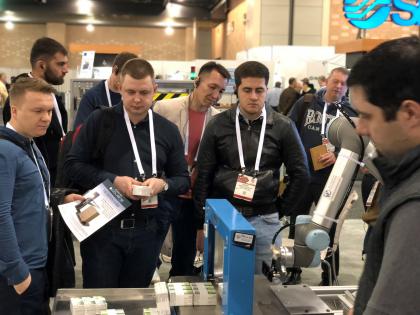
SABIT conducts its U.S.-based training programs by inviting business professionals from specific industries to the United States for approximately two weeks at a time. SABIT designs each program specific to the target industry. Components of each program may include:
- Site visits to U.S. companies and meetings with U.S. industry counterparts
- Visits to major U.S. trade shows and exhibitions
- Educational seminars delivered on business-related themes such as:
- Project management
- Business and strategic planning
- Industry standards and certifications
- Marketing and branding
- Small and medium-sized enterprise development
SABIT Virtual Programming
In 2020 SABIT introduced virtual programming. These virtual events vary in size and structure and are typically tailored to regional, country, or industry-specific audiences. For a full list of past and upcoming virtual events, visit our virtual programming page.
Virtual Programming includes:
- Regular roundtable reunions, specific to industry, for SABIT alumni to reconnect and network with past program participants from other years and countries
- Industry-specific webinar series and engagements
- Meetings with U.S. officials to discuss foreign markets with SABIT Program alumni