



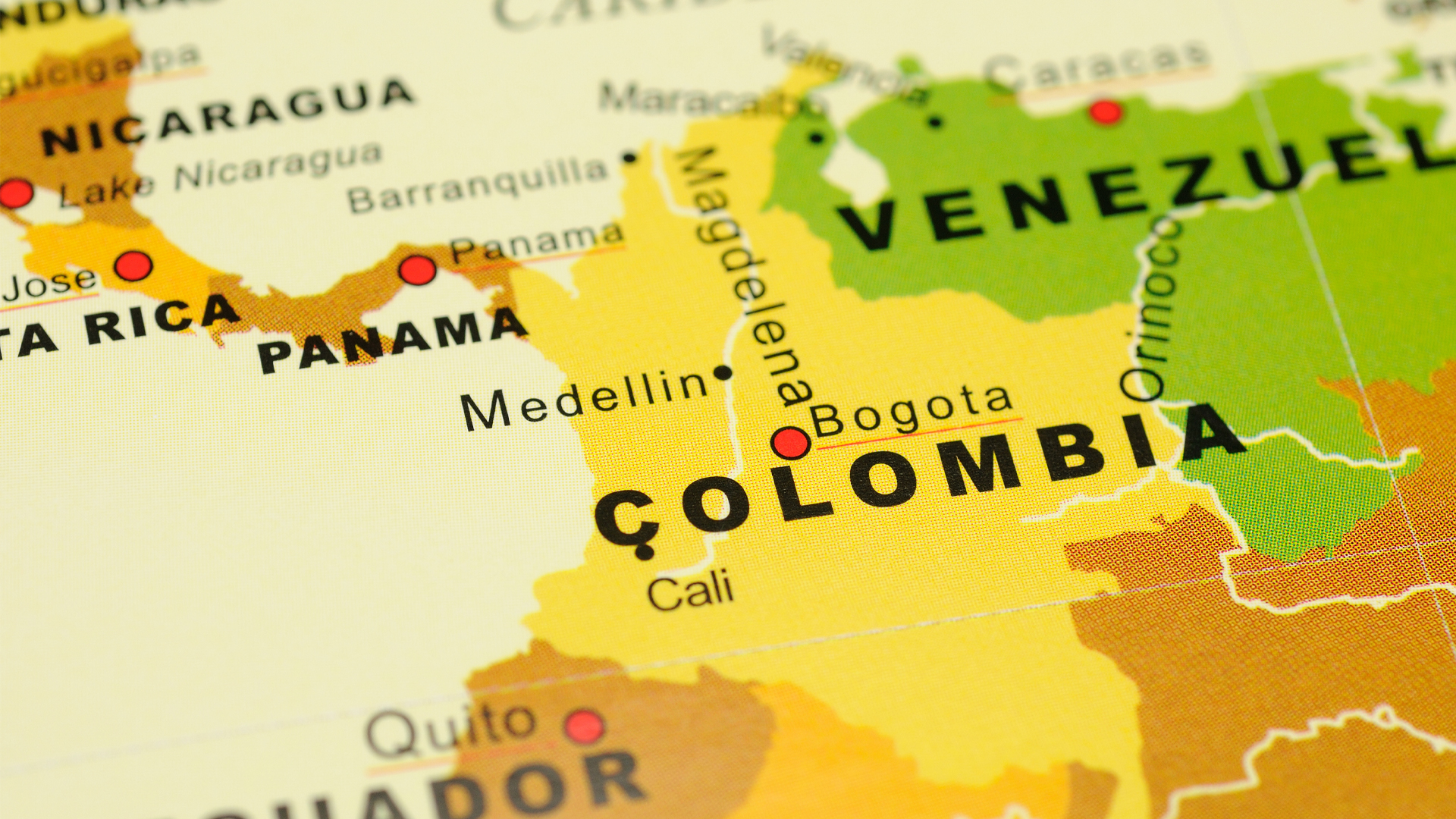
Colombia Major Cities
Colombia has five major municipal areas: Barranquilla, Bogotá, Cali, Cartagena and Medellin, with more than one million inhabitants. Moreover, there are several mid-sized cities that are within the commercial orbit of these major areas. Each of these areas has its own unique commercial profile with opportunities, challenges, leading sectors and key contacts/partners specific to each area.
In this section you will find key information about Colombia’s Major Cities: Barranquilla, Bogotá, Cali, Cartagena and Medellin. To learn more about each area, please download the city business profile.

Barranquilla is strategically located next to the delta of the Magdalena River, 7.5 km (4.7 mi) from its mouth at the Caribbean Sea, serving as a port for river and maritime transportation within Colombia. It is also the main industrial, shopping, educational and cultural center of the Caribbean Region of Colombia. The city is the core of the Metropolitan Area of Barranquilla, which also includes the municipalities of Soledad, Galapa, Malambo, and Puerto Colombia.
Bogotá accounts for 25.5% of Colombia’s GDP with an average economic growth of 3.4% over the last ten years. It is also one of the most important centers for foreign trade in Colombia, in 2019 making up 32.6% of the total value of transactions in foreign trade (exports plus imports). The city holds 33% of the country’s enterprises 384,000 companies. Currently, more than 1,500 foreign companies are located in Bogota, such as 3M, Danone, PEPSICO Inc., Pfizer, SABMiller, Siemens, and TATA Motors, among others.
Santiago de Cali is the capital city of Colombia’s Valle del Cauca region. Its population totals around 2.4 million inhabitants, making Cali the third-largest city in the nation.
Valle del Cauca is one of the most industrialized regions in the country, including over 180 foreign companies from diverse sectors are established in the region. Its geostrategic location allows for a dynamic and competitive logistics environment that serves both domestic - and international markets. Located in the South west of Colombia, Valle del Cauca has the most important seaport on the Colombian Pacific, which moves 42.4% of national foreign trade.
Cartagena de Indias, the so-called Heroic City, is located in Colombia’s northernmost region, along its Caribbean coast. it is the fifth-largest city in Colombia, totaling around 1,239,430 inhabitants. Its expanding economy is growing at one of the fastest rates in the country. The five most important sectors for the region include: Petrochemicals, Plastics, Tourism (including meetings, incentives, conferences, and events), Industrial Maintenance, and International Trade Logistics that comes with being a major port city overlooking the Caribbean.
Medellin is the heart of Colombia’s textile industry, home to major regional trade fairs, and the capital of the commercial flower growing region and innovation district.
The new Center for the Fourth Industrial Revolution located in Medellin - Colombia, is a space to co-create, test and refine protocols, regulatory frameworks and policies that allow us to maximize the benefits and reduce the risks of Industry 4.0 technologies, such as Artificial Intelligence, Blockchain and distributed ledger, Internet of things, robotics and smart cities.