



Practical Export Opportunities: What Ukrainian Agribusiness Needs Today

Date: March 30, 2026
Even in a disrupted operating environment, Ukraine`s agribusiness remains highly active: focused on implementation, continuity, and targeted modernization that pays back quickly. When staff at the U.S. Commercial Service in Ukraine speak with farmers and agricultural holdings companies, the conversation is rarely about “the newest technology” in the abstract. It’s usually about one question: what truly keeps the operation stable and profitable when energy supply is unpredictable, logistics are complicated, and labor is harder to find.
For U.S. manufacturers, that creates a clear export connection. Demand in Ukraine today is being driven by two realities at once. First, domestic production of certain machinery categories has declined, and local suppliers cannot fully cover market needs, making imports essential. Second, wartime conditions have accelerated modernization. Many Ukrainian farms are moving faster toward precision, automation, and better post-harvest systems because these tools reduce risk and waste. A practical example is labor. Many farms are operating with fewer skilled operators than they had before the war, and peak periods like planting and harvest leave very little room for delays or mistakes. That’s why technologies that reduce reliance on manual precision are moving higher on procurement lists. Guidance and autosteer, implement control, and fleet monitoring are not “premium add-ons” anymore—they help one operator cover more hectares per day, avoid overlaps and misses, and keep operations consistent across shifts. For many producers, the payback is simple: fewer reworks, less fuel, fewer wasted inputs, and better on-time implementation when weather windows are tight.
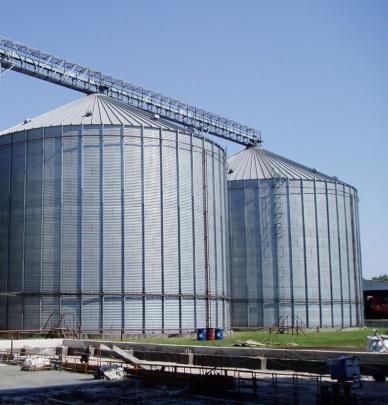
Another consistent theme is post-harvest capacity. Storage availability has improved, including through modular solutions and new investments, but the gap relative to pre-war levels still affects planning. That is why dryers, cleaning and conditioning, and reliable grain handling remain near the top of purchase lists. Producers want equipment that is scalable and serviceable, and systems they can deploy quickly, expand over time, and maintain locally.
Energy resilience has also moved into the core business plan for many farms and processors. There are opportunities in bioenergy such as biogas and biomethane from agricultural waste. This translates into very practical purchases: backup power and microgrid components, power management and switchgear, energy-efficient motors and drives for elevators and conveyors, and solutions that reduce downtime during critical harvest and drying windows.
Within this landscape, U.S. exporters have the strongest opportunities in categories where the value proposition is straightforward and the payback is fast. Ukrainian buyers are highly price-aware, with many producers prioritizing total cost of ownership, including uptime, fuel and input savings, durability, and the reliability of parts and service. Breakdown during planting or harvest can cost far more than the price difference. That’s why solutions with a proven track record in real-world conditions, strong local support, training, and predictable spare parts access often win, even at a higher upfront cost.
Precision agriculture and automation sit at the top of the list. Ukrainian farms, especially mid-to-large operators, are expanding the use of guidance and autopilot systems, RTK infrastructure, telemetry, and digital tools that improve consistency across large fields and mixed-brand fleets. There is also clear demand for planter and seeder upgrades (row monitoring, downforce control, variable-rate drives) and sprayer technology that reduces waste (section control, improved nozzle management, drift reduction, and, increasingly, targeted/spot application). Drones and sensing tools are relevant, too, but buyers are most interested when these products come with practical workflows: scouting and diagnosis software that leads directly to better field decisions.
Planting, tillage, and soil management equipment remains another strong area—particularly solutions that help farms “do more with fewer passes.” No-till and strip-till systems, high-residue seeding solutions, air drills, and heavy-duty implements designed for residue and moisture management are frequently requested. On top of that, soil sampling, mapping, and variable-rate prescriptions are gaining traction because they connect directly to the input-efficiency problem: applying more precisely where it matters and reducing waste where it does not.
At the same time, it is important to recognize a market segment that does not always show up in headlines but drives steady business: repairs, refurbishment, and spare parts. Many Ukrainian farms are running mixed fleets under heavy utilization. Wear parts, filtration, hydraulics components, pumps, belts, bearings, and service tools are constant needs.
What does this mean for U.S. exporters thinking about Ukraine now? In most cases, the differentiator is not only the product. Ukrainian buyers evaluate the full solution: installation and commissioning, operator training, spare parts availability, and service response. Products that can handle rugged
conditions, intermittent power, and mixed fleets are easier to adopt. Financing-friendly structures such as staged deliveries, structured payments, or leasing options, can also make a real difference because many operators manage liquidity carefully even when the business case is strong.
The bottom line is Ukraine’s agribusiness is investing in resilience and efficiency. Precision tools that reduce waste, post-harvest systems that protect value, energy solutions that keep operations running, and dependable spare parts and service are not abstract trends—they are everyday requirements. U.S. manufacturers that can deliver reliable performance, practical deployment, and strong local support will find real, repeatable export opportunities in the Ukrainian market.
Whether you’re new to exporting or already active overseas, rural U.S. businesses are encouraged to include Ukraine in their international growth plans—particularly companies offering equipment and technologies that strengthen on-farm reliability and improve efficiency. Ukrainian buyers prioritize long-term partnerships and expect reliable service, operator training, and spare parts support—conditions that can translate into durable customer relationships and repeat orders once you are established in the market.
The U.S. Commercial Service team in Ukraine stands ready to support you from initial market exploration through partner identification and market entry. They can help you validate demand for your product category, identify and vet qualified distributors and partners, connect you with credible end-users and industry stakeholders, and guide you through practical considerations such as import requirements, tender processes, and due diligence.
The U.S. Commercial Service welcomes the chance to support your decision to pursue Ukraine and to help convert immediate market needs into practical commercial results. Contact your local U.S. Commercial Service Trade Specialist today to see what international opportunities may be available for your business in Ukraine.